
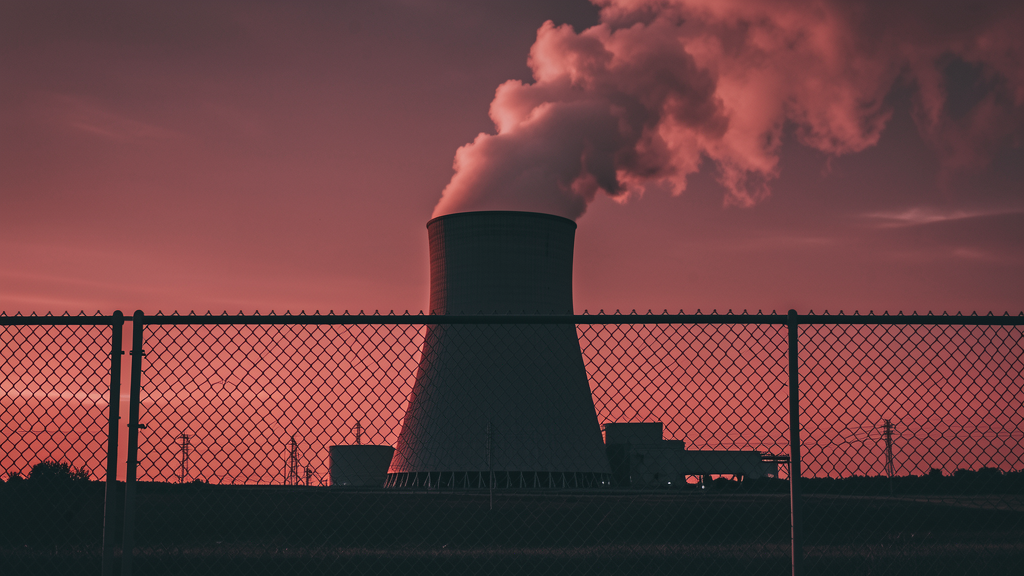
Vogtle Unit 3 Came Online in 2023
It was seven years late and $17 billion over budget. The plant it was supposed to replace at a fraction of the cost - Vogtle Units 1 and 2 - were completed in the 1980s. Same site. Same basic design. One was built on time and on budget. The other was a national embarrassment.
The standard story you hear is that nuclear power is inherently too expensive and too slow to build. This story is repeated by renewable energy advocates, by journalists who have never read a power plant construction report, and by politicians who prefer the narrative to the facts.
The problem is that the standard story is false. Not partially false. Not exaggerated. False.
Nuclear construction costs did not have to escalate. They escalated because the United States made a series of policy choices that guaranteed they would. Other countries made different choices and got different results. The data is public. The question is whether anyone wants to look at it.
What Actually Happened to US Nuclear Costs
The data on US nuclear construction costs comes from the Energy Information Administration, the Congressional Budget Office, and academic researchers like Jessica Lovering of the Breakthrough Institute, who compiled the most comprehensive international dataset of nuclear construction costs ever assembled.
Here is what the data shows.
In the 1960s and 1970s, US nuclear construction costs were stable and competitive with coal and gas. Plants like St. Lucie 2 in Florida and Palo Verde in Arizona were completed within budget and on schedule comparable to other large infrastructure projects. The industry was learning. Costs were declining, following the same experience curve that every other industrial technology follows.
Then something changed.
After the Three Mile Island accident in 1979, the Nuclear Regulatory Commission (NRC) fundamentally restructured the licensing process. Before TMI, utilities could begin construction with a single license and make design modifications as they went - the same approach used in France, Japan, and South Korea. After TMI, the NRC introduced a system of asynchronous regulation: design requirements changed mid-construction, and completed work often had to be ripped out and redone to meet new rules.
This was not safety-driven in any meaningful sense. The NRC itself acknowledged that the changes were often responses to political pressure, not technical findings. But the effect on costs was devastating.
A study by the RAND Corporation found that regulatory changes during construction added an average of 50 to 100 percent to the cost of plants that were already underway. A plant designed in 1975 and completed in 1985 might have gone through three or four complete regulatory frameworks during its construction.
Then came the 1990s. No new nuclear plants were ordered. The regulatory apparatus continued to expand without anyone building anything to test it against reality. When Vogtle 3 and 4 were finally licensed in the 2010s, the NRC’s process had accreted layers of requirement that had never been validated against actual construction. The result was predictable: cost overruns that made the 1980s look disciplined.
What Other Countries Did
While the United States was making nuclear construction impossible by policy, other countries were building successfully.
France built 56 reactors in 15 years. The average construction time was 6.5 years. Costs declined steadily across the fleet. The French did this with the same Westinghouse-derived pressurised water reactor technology that American utilities were using. They did it by standardising the design, centralising the regulatory process, and - this is the key - not changing the rules while construction was underway.
South Korea built its nuclear fleet even more efficiently. The Korean Standard Nuclear Plant (KSNP) program achieved construction times of under 5 years and costs that were among the lowest in the world. Korean utilities built identical reactors at multiple sites, repeating the same design until they had learned how to do it efficiently.
Japan built its nuclear fleet (pre-Fukushima) with construction times and costs comparable to South Korea’s. Japanese utilities used a single basic design - again Westinghouse-derived - and built it repeatedly.
The United Arab Emirates, a country with no prior nuclear experience, completed the Barakah nuclear plant in 2020 with four APR-1400 reactors (a Korean design) built in under 7 years per unit at a cost that was competitive with local gas generation.
The pattern is unmistakable. Countries that standardised designs and stabilised regulatory requirements built nuclear plants on time and on budget. The United States did neither and got the predictable result.
Why America Chose to Fail
The claim that “nuclear is too expensive” is a statement about the past. It is also a statement about policy choices that can be unmade.
The United States did not fail to build affordable nuclear power because the technology was incapable of being affordable. It failed because:
1. The regulatory system incentivised endless redesign. Under the US framework, utilities could not lock in a design before beginning construction. Every regulatory change - and there were many - became a cost overrun.
2. The NRC was captured by the anti-nuclear movement through the courts. After TMI, environmental groups successfully sued the NRC to force additional hearings and design reviews. These lawsuits added years and billions to projects that had already been approved.
3. Utility regulation encouraged cost-plus spending. Under traditional cost-of-service regulation, utilities earn a guaranteed return on capital. If capital costs go up, their profits go up. There was no incentive to build efficiently, and there was a perverse incentive to let costs run.
4. Political risk made investors demand a premium. Because regulatory rules could change at any point, investors demanded higher returns. Those higher returns became another cost that was later cited as evidence that nuclear was too expensive.
This is not a technology problem. It is a policy problem. And the evidence is public.
The Claim That Renewables Are Cheaper
Supporters of wind and solar frequently cite the Levelized Cost of Energy (LCOE) estimates from Lazard’s annual report as evidence that renewables are cheaper than nuclear. There are two problems with this.
First, Lazard’s own estimates show that when you account for the cost of backup generation and grid integration - the “system cost” - nuclear is competitive with wind and solar in most scenarios. Lazard buries this in the footnotes, but it is there.
Second, LCOE comparisons between dispatchable power (nuclear, gas, coal) and intermittent power (wind, solar) are comparing apples to aircraft carriers. A nuclear plant produces power 93 percent of the time. A solar farm produces power 20 percent of the time in most locations. The cost of firming up that intermittent supply with batteries, gas peakers, or transmission lines is rarely included in the headline numbers.
The most honest comparison comes from system cost studies, which account for the full cost of delivering reliable electricity. A 2021 study from the OECD’s Nuclear Energy Agency found that including system costs makes nuclear cheaper than wind and solar in all realistic scenarios.
But this comparison is mostly academic anyway. The real question for energy policy is not “which technology is cheapest in a spreadsheet?” It is “which mix of technologies can deliver reliable, affordable electricity at the scale required by a modern economy?” Nuclear has done this for 60 years. Wind and solar have not.
What a Different Policy Would Look Like
America could build affordable nuclear power again. The policy changes required are well understood and have been successfully implemented in other countries:
-
Standardised, pre-approved designs. A utility should be able to buy a reactor design that has been fully certified, lock it in, and begin construction knowing the rules will not change.
-
Fixed regulatory timelines. The NRC should be required to complete licensing and permitting within a set period, after which additional hearings are not permitted.
-
Regulatory stability. Design requirements adopted at the start of construction should remain in force for the duration of the project. Changes should apply only to future plants.
-
Insurance pooling for large projects. Congress created the Price-Anderson Act to handle nuclear liability insurance in the 1950s. A similar mechanism for construction cost overruns - a mutual insurance pool funded by utilities - would remove the investor anxiety that drives up capital costs.
These are not radical ideas. They are the policies that France, South Korea, and the UAE used to build nuclear plants on time and on budget. The United States used some version of them before 1979. What happened after 1979 was not a discovery that nuclear was too expensive. It was a decision to make it so.
Sources
- Lovering, J.R., Yip, A., & Nordhaus, T. (2016). “Historical construction costs of global nuclear power reactors.” Energy Policy, 91, 371-382.
- RAND Corporation (1986). “The Effects of Regulation on Nuclear Power Plant Construction Costs.”
- OECD Nuclear Energy Agency (2021). “Projected Costs of Generating Electricity.”
- Congressional Budget Office (2008). “Nuclear Power’s Role in Generating Electricity.”
- MIT Energy Initiative (2018). “The Future of Nuclear Energy in a Carbon-Constrained World.”
- Grubler, A. (2010). “The costs of the French nuclear scale-up: A case of negative learning by doing.” Energy Policy, 38(9), 5174-5188.