


The worst-case climate scenario that terrified the world into spending trillions has been officially declared implausible. It was never plausible. Everyone who checked knew this.
This is not a story about climate denial. It is a story about institutional incentives and how a bureaucratic system designed to produce alarming findings will produce alarming findings - even when the evidence does not support them.
In Part 1 of this series, I showed how the IPCC’s incentive structure works: scientists need dramatic findings to get published, journalists need dramatic stories to get clicks, and policymakers need dramatic ‘crises’ to justify dramatic action. The pipeline from academic study to media headline to policy proposal has a selection bias that systematically overstates risk.
Now let me show you three specific cases where that pipeline produced claims that did not survive scrutiny.
Case 1: RCP8.5 - The Scenario That Refused to Die
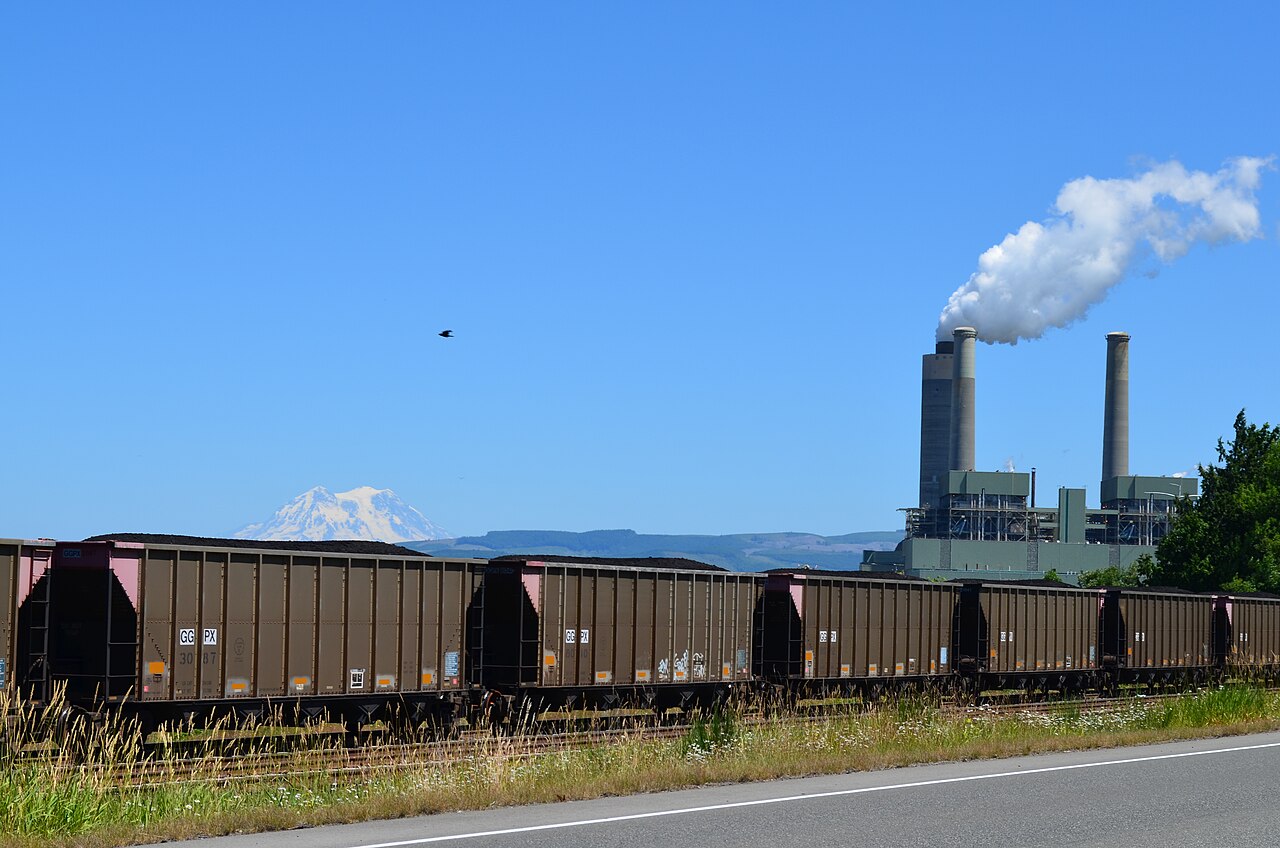
Representative Concentration Pathway 8.5 was one of four scenarios the IPCC used to model future climate outcomes. It assumed extreme coal use throughout the 21st century - roughly five times current coal consumption by 2100. It was designed as a high-end boundary case, not a prediction. In climate modeling, you include extreme scenarios to bracket the range of possibilities, the same way an architect stress-tests a bridge against loads it will never actually carry.
But RCP8.5 was never treated as a boundary case in public discourse. It became the default baseline. Every headline about climate catastrophe was built on it. Every policy proposal assumed it. Every trillion-dollar spending plan was justified by the outcomes it projected.
The problem: RCP8.5 was implausible from the start. Even in 2010, when it was designed, the emission levels it assumed would have required a global return to 19th-century energy policy. Coal use would have needed to grow faster than at any point in history and then keep growing for 90 years. The scenario assumed no peak coal, no renewable energy deployment, no policy response, no technological change, no market forces - a world where nothing changes for a century while everything gets worse.
In the early 2020s, several independent research groups published papers showing that RCP8.5 was inconsistent with actual emission trends. Coal use had peaked. Renewables were growing faster than anyone had predicted. The scenario was, by any reasonable standard, dead.
The IPCC officially acknowledged this in 2026. It took them years. RCP8.5 had been used in thousands of studies, cited in hundreds of policy documents, and baked into the assumptions of every major climate model. Admitting it was implausible would mean re-evaluating everything built on it. The system resisted that re-evaluation for as long as it could.
Case 2: The 2,700 Heatwave Deaths Headline
In the summer of 2026, following a major European heatwave, a study estimated that 2,700 people had died as a result of the extreme temperatures. The number made global headlines. It was cited by politicians as evidence that climate change was killing people and that urgent action was needed.
The study used a standard epidemiological method: compare observed mortality during the heatwave period to expected mortality based on historical trends, and attribute the difference to the heat. The method is widely used and generally accepted.
But the study’s numbers did not survive peer review by independent researchers. Re-analyses found that the baseline mortality estimate was too low, meaning the excess deaths were overstated. The timing windows were chosen in a way that maximized the apparent effect. And the attribution to heat specifically was questionable - other factors, including a concurrent flu outbreak, were not adequately controlled for.
The corrected estimates put the excess deaths at roughly one-third of the original headline figure. Still tragic. Still worth studying. But not 2,700.
The original study received widespread coverage. The corrections did not. The 2,700 number will still be cited by politicians and activists in years to come, because it was dramatic and it fit the narrative.
Case 3: Adjusting the Temperature Record
The global temperature record is not a simple measurement. It is a reconstruction built from thousands of individual readings, adjusted for known biases - changes in instrumentation, station relocations, urbanization effects, and so on. These adjustments are legitimate and necessary. The question is whether they are applied consistently and transparently.
Over the past two decades, several adjustments to the historical temperature record have made the past appear cooler and the present appear warmer. Each adjustment was justified on methodological grounds. Each adjustment moved the trend in the same direction. The cumulative effect has been to steepen the apparent warming trend, even as the underlying temperature data stays the same.
The Berkley Earth project, founded by Richard Muller - a physicist who was initially skeptical of the mainstream temperature record - set out to build an independent temperature reconstruction from scratch. They used different methods, different station selections, and different adjustment procedures. Their result: the warming trend was real, but the adjustments in the official records had introduced a systematic bias that exaggerated the trend, especially in the earlier part of the record.
The adjustments themselves are not evidence of fraud. They are evidence of methodological choices that consistently move in one direction. The direction is the problem.
The Through-Line
These three cases share a common pattern. In each one, a system designed to detect alarming findings produced findings that were more alarming than the evidence justified. RCP8.5 was implausible but treated as the baseline. The heatwave death study had methodological problems but the headline was never corrected. The temperature adjustments moved the trend in the same direction but each one was defended in isolation.
The pattern is not conspiracy. It is selection bias built into the institutional structure of climate science and its media amplification. The system systematically filters for alarm. Studies that produce moderate findings get less attention, less funding, and fewer citations. Studies that produce dramatic findings get the opposite. Over time, the literature shifts toward the dramatic, and the public perception shifts with it.
In The Grievance Machine, Part II, I showed how the hyena dynamic works: academics need findings, journalists need stories, politicians need crises, bureaucrats need problems. Climate science is a particularly clear example of this because the stakes are high and the uncertainty is large enough to accommodate a wide range of interpretations.
The Question
The IPCC has now officially acknowledged that RCP8.5 was implausible. The heatwave death study has been corrected in the academic literature. The temperature record adjustments are increasingly scrutinized.
The question is not whether these specific errors matter. It is how many more RCP8.5s are still embedded in the policies you are already paying for. Every climate model, every cost-benefit analysis, every policy projection is built on assumptions that may be as flawed as RCP8.5. Most of them have never been independently audited. Most of them will never be corrected, because the incentives run the other way.
What you can do. When you hear a dramatic climate statistic, ask where it came from. Is it a scenario or a prediction? Has it been independently verified? Who benefits from it being alarming? The answers might surprise you.