
The Bill Before the Bill
In our last article, we watched a new UK Labour government cut a climate levy off the electricity bill and call it progress. The cut was real. So was the pattern: a government touching one line of the bill, taking the credit, while the rest of the bill keeps climbing.
This week brings the sequel. The regulator confirms the next price cap on or before August 26. The forecasts are already out. And the line that matters most is not the one the politicians talk about.
It is the standing charge. The fixed daily cost that every household pays before using a single watt.
Let us start with the fair version, because the standing charge is not a scam and it is not new. The wires that carry electricity to your house cost money whether you use them or not. The network must be built, maintained, metered, and repaired. The supplier must bill you, answer the phone, and hold enough cash to buy power on your behalf. Someone has to pay for all of that before the first appliance is switched on.
That is what the standing charge is: the fixed price of being connected. In a well-run system, it would be a modest connection fee - visible, stable, and small next to what you actually use. That is the version the regulator describes. It is also the version the textbook describes.
The price cap is the regulator’s tool for controlling the bill. Every quarter, Ofgem sets the maximum a supplier may charge per unit of electricity and gas - the unit rate - and the maximum daily standing charge. The cap is meant to protect households from being overcharged. It gets the headlines when the unit rate moves.
The standing charge is the line that actually moved.
The Line-by-Line Bill
Let us take the bill apart line by line, because the first lesson of the energy bill is that almost nothing on it is set by anything you can influence.
The unit rate is what you pay per kilowatt-hour. It is capped by Ofgem, and it is the only line that responds to your behavior. Use less, pay less. This is the line the politicians quote and the line the headlines track.
The standing charge is the fixed daily sum. It is also capped, but it does not respond to anything you do. The House of Commons Library, which tracks the charge, put the electricity standing charge at about 57.2 pence a day for the current quarter. Do the arithmetic: 57.2 pence a day is roughly £209 a year on electricity alone, before a single watt. Add the gas standing charge, and the carried figure lands near £315 a year. That is the bill before the bill - the sum you owe for the privilege of being connected, regardless of whether you use anything.
The levies are the policy line. These are set by the government and collected through the bill: the Warm Home Discount, the renewable obligations, the social schemes. The Warm Home Discount alone is £150 a year for the households that qualify, and the scheme is now in its sixteenth year. This is where the story from The Labour PM Who Cut Your Climate Tax lives, and where The Carbon Tax That Already Exists applies: the state has been collecting carbon and social policy revenue through your bill for years without calling it a tax.
The network line is the largest fixed cost. The distribution and transmission companies are regulated monopolies. They do not compete on price; they are awarded a regulated return under Ofgem’s price control. Every grid upgrade, every pylon, every new connection lands on this line, and the return is guaranteed by the state.
Now ask who profits from each line. The Treasury takes the levies. The network companies take their regulated return, guaranteed whatever happens. The supplier keeps a thin margin and carries the risk. The one line that depends on you - the unit rate - is the one line the state does not need to touch.
Notice the structure. Nothing on this bill is set by a market. Every line is set by the state, a regulator, or a regulated monopoly. The single thing you control moves the single line the state does not control. Hold onto that, because it explains everything that follows.
The October Exhibit
Now the numbers, with their baselines. The current price cap is £1,663 a year for a typical household. That figure already contains a confirmed 13 percent rise from July.
October is forecast higher. Cornwall Insight’s final forecast put the next cap near £1,729.31, and the official October cap printed at £1,723. Uswitch’s survey of supplier prices lands around £1,732. British Gas’s own estimate is £1,730. The forecasts are not identical, but they agree on the direction, and the range is tight.
Notice what happened to the number before it reached you. The £1,723 is calculated on the new Typical Domestic Consumption Values - the regulator’s updated assumptions about how many units a typical household actually uses. On the old assumptions, the same prices come out to £1,935. Same prices, same winter, bigger number. The headline shrank because the yardstick got shorter, not because the bill did.
In the middle of all this, the government cut VAT on electricity to zero percent. It is worth about £43.51 a year to a typical household. The official framing called it a down payment on lower bills.
Let us place the down payment next to the trajectory. The cap rose 13 percent in July. It is forecast to rise again in October. The cut is worth £43.51 a year. The July rise alone added well over £100 to the typical annual bill. A £43.51 gesture against that is not a down payment on lower bills; it is a receipt for one line of the bill, handed over while the other lines climb.
And remember the promise. The regulator consulted on zero and low standing charge tariffs. They were promised for January 2026. On the forum threads, households still ask where they are - the question threads run on, unanswered. The answer so far is a pilot. More on that in a moment.
The Demand-Side Crack
Here is the human exhibit. A BusinessGreen poll published August 19 found that over two-thirds of UK households are actively reducing their energy use because the bills are too high.
Think about what that means. Millions of households are doing exactly what the price signal asks them to do: using less. They are the obedient customers of the entire policy apparatus. And the standing charge does not move.
It cannot move. It is not a charge for using; it is a charge for existing on the grid. The household that cut its usage by a third still pays the same fixed daily sum. The household that cut by half still pays the same fixed daily sum. The household that cut to zero - the flat left empty, the pensioner who sits in the cold - still pays the same fixed daily sum.
The standing charge does not punish waste. If there is any waste, it is punished by the unit rate. The standing charge punishes connection - and since connection is not optional, it punishes everyone equally, which in practice means it punishes the poor hardest. A one-bedroom flat pays the same standing charge as a six-bedroom house. The flat’s share of the bill is a much larger share of its bill and, most likely, its income.
The two-thirds who are cutting usage are being told, in effect: your thrift saves you the unit rate. It does not save you the bill. And the people who cannot cut - the household with medical equipment, the family with a baby in a cold home - cannot opt out of the fixed line either. They pay it with the heating on, or they pay it with the heating off.
Now follow the mechanism one step further, because the fixed charge turns into a machine with its own momentum. The grid’s costs are mostly fixed. When two-thirds of households use less, the same fixed costs get spread over fewer units, so the unit rate has to rise to recover them. The rising unit rate pushes more households to cut. The cutting spreads the fixed costs over fewer units again. The regulator calls this a transition. The households call it a spiral, and they are paying for both ends of it.
The 80 Pence
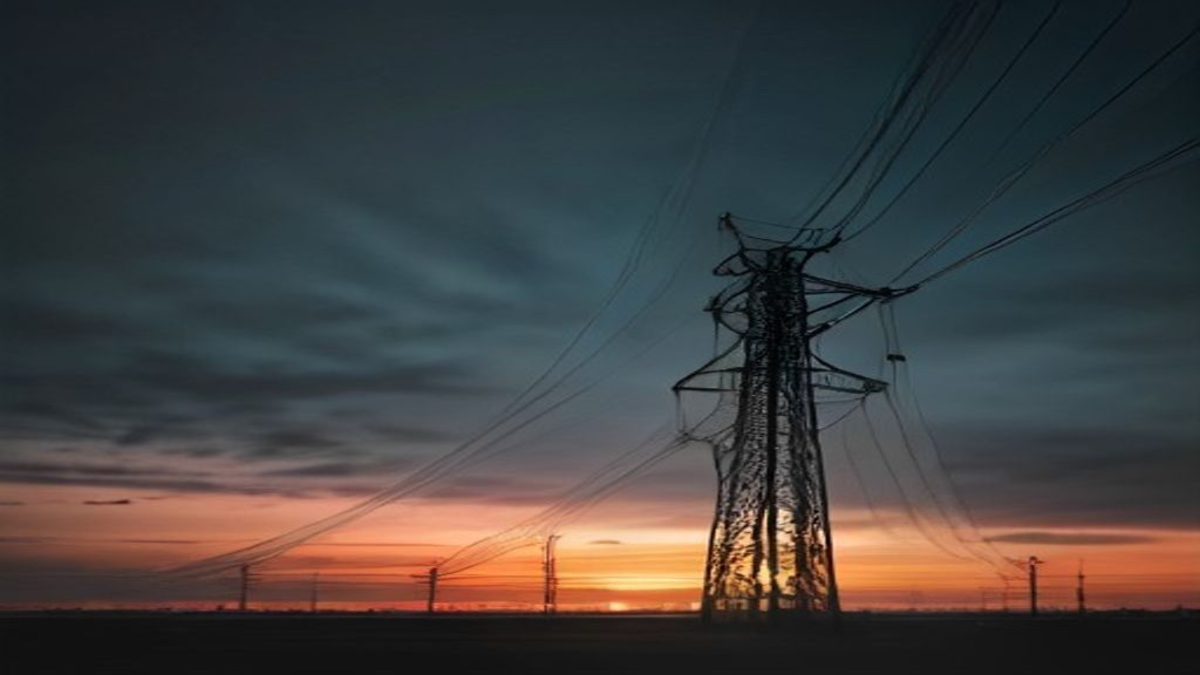
The freshest example of how this machine works arrived this week, and it is the cleanest one yet. The pylon discount.
About 80 pence a year from every household bill is pooled, to pay households near the first 43 pylon projects £250 a year for ten years.
Forty-three projects is the first tranche. There are hundreds of miles of new lines planned behind them. The 80 pence is the price of the pattern, and the pattern is just getting started.
Everyone pays a little. A few receive something. The reactions on both sides use the same words: insulting. Pitiful. A slap in the face. To the household that pays the 80 pence, it is a new line on a bill that is already climbing. To the household near the pylons, £250 a year is a fraction of what the project takes from the value of their property. The policy is insulting to the people paying and insulting to the people receiving.
That is the signature of a policy designed for no one except the people who announced it. It is a line item that lets the state say it did something, while the structural problem - the fixed charge itself - continues.
And what is the regulator’s structural answer to the standing charge? A pilot. Since June 2026, EDF, E.ON, Octopus, and British Gas have run lower-standing-charge tariffs for about 150,000 customers. It is being evaluated until April 2027.
Ask the question the machine does not want asked. If the fixed charge is the problem - the same fixed charge on every bill, the charge that punishes exactly the households who cut usage - why is the fix a pilot for 150,000 people, evaluated to April 2027, while the charge itself climbs for the other 28 million households? The pilot ends. The pilot is a promise to study the problem. The problem keeps billing.
Evidently, no pilot is needed when the price increases. Only when a partial decrease is contemplated is a ‘pilot’ required.
This is the same pattern we saw with The 78% Tax on the North Sea: the state squeezes the same bills from every direction and calls each squeeze something else - a climate policy, a fairness measure, a discount. And it is the same state that reached into pensions with The Pension Tax Raid and reaches into the bill with the standing charge. The households are the same. The story is the only thing that changes.
Let us be fair to the machine, because the pattern is not a conspiracy. The network companies want a guaranteed return; the standing charge delivers it. The government wants to collect levies without a vote; the bill delivers it. The regulator wants to cap the visible line while the hidden line moves; the structure delivers it. Everyone in the chain is doing exactly what their incentives tell them to do. The incentives are the problem, not the people.
Germany is the warning. Its energy transition loaded the cost onto the same fixed lines, and its electricity prices doubled while emissions stayed flat - the outcome of Germany’s €600 Billion Lesson. The fixed line is how the cost of the transition gets collected from people who never agreed to pay it, in a way they cannot avoid and cannot reduce. The same architecture is being built here, one line at a time.
The Question
The next time a politician promises to cut your energy bill - or a regulator announces a pilot, or the state adds 80 pence to your bill to pay your neighbor - ask three questions.
Which line of the bill are they moving? Who picks up the tab? And what happens when the pilot ends?
The standing charge is the answer to all three. It is the line that moved. You pick it up. And the pilot, like every pilot before it, ends in April 2027 with a report.