


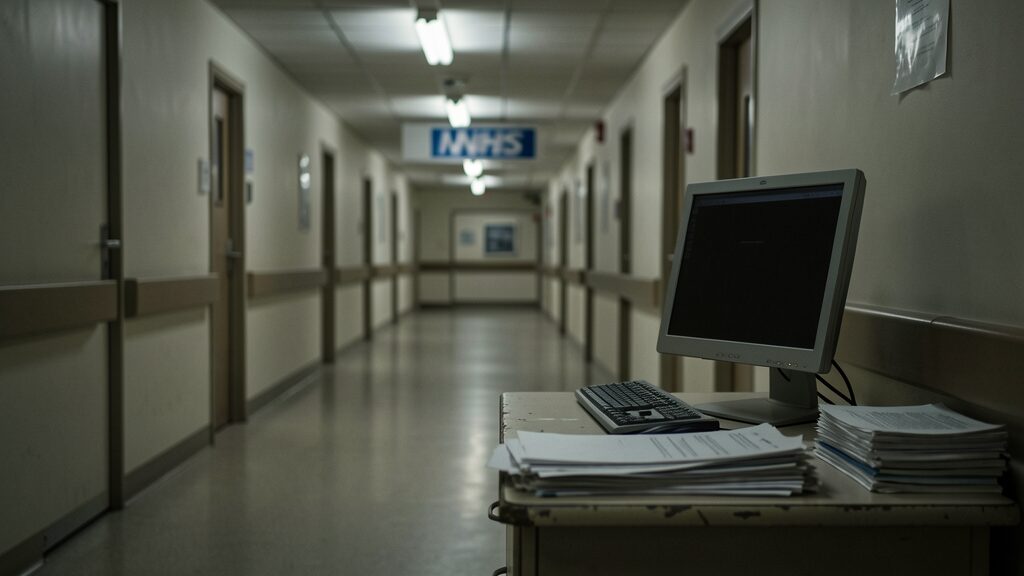
In 2002 the British government announced the largest civilian IT project in history. The National Programme for IT would give the NHS something no health service had ever had: a single electronic record for every patient in the country. Every prescription, every test result, every hospital admission, available to any clinician, anywhere, instantly.
It was going to transform the NHS. It was going to cost £2.3 billion.
It cost roughly ten times that, delivered essentially nothing, and was dismantled in pieces over a decade. MPs called it one of the worst fiascos they had ever seen. This is the first IT case study in Why Things Break, and it sets the scale for everything that follows: when government decides that something is good and backs it with borrowed money, the risk of being wrong is paid by someone else.
The story
The scale alone should have been the warning. The NHS is not one organization. It is dozens of hospital trusts, thousands of GP practices, and hundreds of thousands of clinicians, each with their own way of doing things, their own legacy systems, their own paper files. A single system for all of them would have been the largest software integration in human history, built by committee, delivered to a schedule set by politicians.
The Department of Health decided to do it anyway, in one go, nationwide, with no pilot. Four regional suppliers were chosen to build it: BT, Accenture, CSC, and Fujitsu. Each was assigned a part of the country. Each was expected to deliver a care records system that had never been built anywhere in the world, to requirements that were still being written, against a deadline measured in years, not decades.
The flagship product, the care records system, never worked. One supplier, Accenture, walked away in 2006. Fujitsu’s contract for the south of England was terminated in 2008. The remaining suppliers delivered fragments, late and incomplete. The one system that did reach clinicians, the Summary Care Record, was a stripped-down shadow of what had been promised - a few fields of data for a fraction of patients, years late.
The money did not stop. The initial £2.3 billion estimate was revised upward, repeatedly. By 2006 the National Audit Office put the ten-year cost at £12.4 billion. When the programme was finally dismantled, in 2011, the Department’s own estimate was £9.8 billion - and that figure, the Public Accounts Committee noted in 2013, left out the future costs of the still-undelivered Lorenzo system and the legal bill for terminating Fujitsu’s contract. The widely cited total is ten billion pounds, and it is conservative.
The Fujitsu aftermath deserves its own paragraph, because it shows what happens after the failure. Fujitsu’s £2.7 billion contract was terminated in 2008. The resulting dispute ran for a decade: Fujitsu sued the Department of Health, the department counter-sued, and in 2018 the two sides settled a £700 million legal fight, with the department making a further payment reported at around £400 million. The final total was never disclosed. The company that had failed to deliver the care records system for the south of England was paid, in the end, to go away.
The same company, in the same years, was running the Post Office’s Horizon accounting system, which was falsely accusing sub-postmasters of theft and sending some of them to prison. One supplier, two national disasters, zero consequences for the supplier - and, as we will see, zero for the people who hired it.
The test
Run the incentive trace. Who benefited?
The suppliers, for a start. BT, CSC, Accenture, and Fujitsu collected fees for a decade of work on systems that were never completed. When the work went wrong, the contracts became litigation, and the litigation ended in settlement payments. The consultants who advised on the programme billed for years. The executives who ran the programme moved on, upward, to the next public sector appointment.
The politicians got what they needed at the time. The programme was announced with a flourish in 2002. Tony Blair’s government could say it was modernizing the NHS, the biggest single investment in IT in the country’s history. The ribbon-cutting happened at the announcement. By the time the failure was undeniable, most of the people who had cut the ribbon were gone from their posts, and the ones who remained could blame the suppliers, the complexity, or the previous government. Nobody who voted for the programme lost their seat over it.
Who paid? The NHS trusts, which spent years working around systems that did not work and were then charged for the privilege of doing so. The clinicians, who went back to paper. The taxpayers, who supplied the ten billion pounds. And the patients, who were promised a safer, faster, connected health service and got a failed technology programme instead.
And the deeper point, the one this series keeps returning to: there were no technocrats in the room. The people who understood software - who knew that you do not build the largest integration in history without a pilot, who knew that requirements cannot be written by people who have never used a care records system, who knew that four competing suppliers would never share data they were each being paid to own - were not the people making the decisions. The people making the decisions understood politics. They saw a problem, decided a system would fix it, and announced the system. The people who could have told them it was doomed, and there were many, were not invited.
The pattern
The horror is not that it happened. The horror is that it was the latest in a line of identical failures stretching back decades, and that the line continues.
The National Programme for IT was not the first government IT disaster, and its shape was not new. The same pattern - grand announcement, enormous budget, impossible scope, no pilot, contractors paid regardless of outcome, failure blamed on everyone except the decision-makers - was documented in Computing and Computer Weekly throughout the 1970s, 1980s, and 1990s. The same mistakes recur with different logos. The details change; the incentives do not.
The programme was dismantled in 2011. What replaced it was not a lesson. It was a repeat: fragmented local systems, a new wave of contracts, and, in 2023, a fresh announcement that the NHS would get the digital transformation it had been promised twenty years earlier. The announcement was made with the same confidence, and the same absence of anyone who had built a large software system, as the one in 2002.
The lesson
The lesson is not that the NHS should have chosen a different supplier, or a different technology, or a different minister. The lesson is structural. When the people who decide cannot lose and the people who pay cannot decide, the same outcome recurs, indefinitely.
The fix would be boring and cheap: pilot first, always; require the decision-makers to have built something; make the budget a personal liability of the people who approve it; write contracts that stop paying when delivery stops. None of this is mysterious. Every competent software organization in the country does some version of it. The public sector does not, because the people who run the public sector are not rewarded for delivery. They are rewarded for announcement.
The NHS spent ten billion pounds and got a big bag of nothing. The next one is already being announced. The question is whether the people announcing it have ever built anything, and whether they will be in the room when the bill arrives. Based on fifty years of evidence, they will not be.